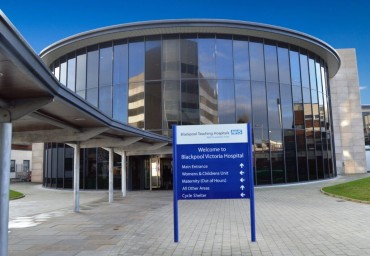


At Blackpool Teaching Hospitals, we understand the profound pain and heartache that comes with the death of a baby, whether through miscarriage, termination for medical reasons, stillbirth, or neonatal death. Our dedicated swan maternity bereavement team are here to offer support.
We want you to know that you are not alone, and we are committed to walking alongside you every step of the way. Working closely with our obstetric and midwifery colleagues, we provide care and support tailored to your needs, ensuring you have the help you need for as long as you need it. Your grief is deeply acknowledged, and we are here to support you through this heartbreaking journey.
The Maternity Swan Bereavement Team at Blackpool Victoria Hospital includes Laura Walsh, Bereavement Midwife and Lucy Brockhill, Bereavement Support Worker, who work together to support families experiencing baby loss.
They provide compassionate, individualised care, offering emotional support and practical guidance during an extremely difficult time. The team ensures families are treated with dignity, kindness, and respect, and they work closely with parents to ensure their needs and wishes are recognised throughout their care.
In circumstances where families require more specialist, long term bereavement support, the team can refer to Petals for specialist bereavement counselling. More information can be found by visiting the Petals charity homepage.
Contact the team by emailing bfwh.


Many parents feel it is very important to see and hold their baby regardless of their size, condition or the stage of pregnancy at which they died. It is completely natural to feel anxious or unsure about this.
Our midwives will gently support you, talk through your options, and be with you every step of the way. For many parents, the time they spend with their baby becomes a much-cherished memory in the months and years ahead.
Memory making is an important part of bereavement care and is offered sensitively by the Maternity Swan Team and the midwifery staff.
Families are given the opportunity to create special memories with their baby, if they wish. This may include:
- Hand and footprints
- Hair locks
- Photographs
- Name bands
- Memory boxes containing keepsakes from your time together.
Families are supported to decide what feels right for them, and nothing is done without consent. The aim is to provide lasting, tangible memories, recognising that for many families, this time in hospital may be the only time spent together.
This care is always provided with compassion, privacy, and respect.
Spiritual support is available to all families experiencing baby loss, whatever their faith, beliefs, or cultural background.
The hospital Chaplaincy team can provide a quiet presence, emotional support, naming ceremonies or religious care such as prayers, blessings or baptisms if requested.
Families who do not follow a faith are equally supported. The aim is to ensure everyone feels respected, supported, and not alone, with care that reflects what is right for them personally.
In some circumstances, families may be able to take their baby home for a short time following their loss. This option is discussed sensitively by the Maternity Swan team, depending on individual circumstances and wishes.
For some parents, being able to take their baby home for a short time can feel important, giving them the chance to spend time together in a familiar and private place before saying goodbye. Families are fully supported with clear guidance and practical arrangements, and care is always provided with dignity and respect.
This option is entirely the family’s choice, and there is never any pressure to do so.
Planning a funeral for a much‑loved baby is something most families have never had to think about, and it can feel overwhelming to know where to begin.
The Maternity Swan team are here to support you. The options available will depend on the circumstances surrounding your loss but may include a hospital‑arranged burial or cremation, or arranging a private burial or cremation with a local funeral director.
For babies born under 24 weeks with no signs of life, there are additional options that can be discussed. The team will talk these through with you and gently guide you, offering care and support as you navigate this very difficult time.
In England, all stillbirths (a baby who has died during pregnancy at 24 weeks gestation or later) and neonatal deaths of any gestation, are required to be registered by law.
The Bereavement team will ensure all required documentation is complete and will liaise with the hospital bereavement office and Registrars to make arrangements for the registration. The team will then contact you with the date and time of the registration appointment.
Once registered, families of babies who are stillborn will receive a stillbirth certificate. Families whose baby has shown signs of life and sadly die, will receive a birth and death certificate.

Address: Town Hall, Talbot Square, Blackpool, FY1 1GB
Email: registrars.
Phone: 01253 477177
Hours: Monday to Friday, generally 9am to 5pm
Families whose babies have been stillborn or have died at other hospitals, will be provided with information on where they need to attend for registration.
Baby loss certificates are available for either parent following the loss of a baby before 24 weeks gestation, where the baby has been born with no signs of life.
The certificates are provided (free of charge) to families to formally recognise the devastating impact of pregnancy loss. The certificates, which are not compulsory, are official but not legal documents. You cannot use them to claim benefits, and they will not be added to your GP record.
Should you wish to request a baby loss certificate please visit the Gov UK website: Request a baby loss certificate - GOV.UK.
Before you start you will need:
- Your NHS number or postcode registered with your GP
- The mobile phone number or email address registered with your GP
- Permission from the other parent and their email address, if you want their name on the certificate.
You can find out your NHS number on the NHS website: Find your NHS number - NHS.
After baby loss, some mums and lactating parents find milk production distressing, while others find expressing milk comforting. There is no right or wrong way to feel, and no pressure to make any particular decision.
The maternity team can discuss options with you, including medication such as cabergoline, which may help stop milk production. Milk supply and duration vary from person to person and will naturally reduce over time.
If breastfeeding has already been established, it is important not to stop suddenly, as this can increase the risk of complications such as engorgement or mastitis.
Engorgement:
Engorgement is when the breasts become swollen, firm, and painful. It can happen between two-five days after the loss of your baby. Your breasts can leak milk and feel uncomfortable for up to 7-14 days. This can settle on its own. If severely engorged, your breasts can become hard, shiny, warm, and slightly lumpy to touch.
Relieving symptoms of engorgement:
There are a variety of methods that can be used to reduce milk production including prescribed medication and a milk reduction routine. These are a few suggestions to help relieve engorgement.
- Take regular pain relief.
- Wear a support bra e.g. a sports bra day and night.
- Use breast pads to absorb leaking milk.
- Use cold compresses for 15-20 minutes – avoid heat.
- If your breasts feel very full, hand express a small amount off for comfort.
- Have a warm bath or shower to allow the breasts to leak naturally (ensure shower water jets are not directly on the breasts)
- Sleep on your back.
Mastitis:
Mastitis is inflammation of the breast, which, if left untreated, can develop into a more serious infection. Symptoms include:
- red, swollen area on the breast that is hot and painful to touch.
- breast lump or area of hardness on the breast
- white or blood-stained nipple discharge
- flu-like symptoms including fatigue, chills, fever.
If you display any of these symptoms, it is important to contact the midwifery team or GP as antibiotic treatment may be required.
Reducing your milk supply:
If you were expressing regularly for a premature or ill baby, you will need to gradually reduce the amount of breast milk produced. This can be done through increasing the time between hand expressing, over a few days and eventually coming to a stop. If you are unable to find relief using hand expressing a pump can be used, however only spend as long on the pump as it takes to reduce the pressure in your breasts; emptying your breasts will encourage your body to produce more milk.
Donating your milk:
Some families may wish to donate their breast milk in memory of their baby.
The Milk Bank at Chester accept self-referrals for milk donation. More information can be found on their website: The Milk Bank at Chester.
When your baby dies, it can feel very important to understand why. Sometimes the cause of death is clearly related to a medical condition in mother or baby. For many babies, the cause is not clear straight away and investigations can help to understand what happened. Sadly, in some cases, even after full investigations the cause of death may remain unclear.
Blood tests and swabs:
Maternal blood tests may be offered to screen for several health conditions, which may have been a contributing factor to the loss of a pregnancy or death of a baby. In some circumstances, swab tests may also be taken, particularly where there is believed to be an infection.
Placental examination:
In most circumstances, placental examination should be offered, and this can take place, whether or not there is a post mortem examination of your baby. The procedure involves taking samples of the placenta to study under a microscope – this is often referred to as placental histology.
Examining a placenta can sometimes provide extremely valuable information about why your baby died and, in some circumstances, help with the management of a future pregnancy, which some parents may want to ask.
Placental histology takes place at St Mary’s Hospital Manchester, and the results will be sent to the Bereavement team and your named consultant.
Post-mortem:
A post-mortem (also called an autopsy or PM) is the medical examination to help understand any factors that might have contributed to a baby’s death. Unless it has been ordered by a coroner, a post-mortem examination cannot be done without parental consent. More information about the types of PMs and the process will be given to you by the bereavement midwife/doctor when going through the consent form and they will be able to answer any questions.
Why are post-mortems carried out?
PMs are usually carried out to help find out how or why a baby died. Sometimes families ask questions that can only be answered with information from a post mortem examination. It is important to recognise, however, that sometimes PM’s do not provide definitive answers.
They help to:
- Identify the cause of death.
- Confirm the nature/extent of an illness.
- Identify other conditions that may not have been diagnosed.
- Assess the effects of treatments and drugs and identify any complications or side-effects.
- Help plan future pregnancies and care during pregnancy.
Who performs the examination?
PMs on babies are carried out by specialist pathologists - doctors who specialise in the diagnosis of disease and identifying causes of death. The pathologist is helped by other staff, usually at least one mortuary technician.
Where/when is the carried out?
Post-mortems for babies born at Blackpool Victoria Hospital will be carried out at Manchester Children’s Hospital, or in circumstances where a coroner has instructed the examination, the PM will take place at Alder Hey Children’s Hospital in Liverpool.
The PM will be carried out as soon as possible, usually within a week of the consent form being completed or the coroner’s request, however this is sometimes longer in circumstances where the pathologists have a high number of post mortems to perform.
Most babies remain at Manchester Children’s Hospital or Alder Hey Children’s Hospital for one-two weeks, before they return to Blackpool Hospital once the examination is complete. In coroner’s post mortems, this can sometimes be much longer.
The Maternity Swan team will update parents throughout the process and help support funeral planning once babies have returned to Blackpool.
Can my baby be seen after post-mortem?
After the PM, the mortuary staff will prepare your baby as they had arrived. Dressed and wrapped in the same way for family to see and hold again if you wish. The appearance of your baby will have changed following the PM, so it is important to discuss this with the funeral director or Bereavement team to know what to expect.
How do we get results?
After the tests are complete, a copy of the post mortem report will be sent to the bereavement midwife and your named consultant. Reports take on average 6 months to come back to the Trust, although this can sometimes be longer.
The bereavement midwife will arrange a follow-up meeting with you to discuss the findings of the PM. The meeting will include the bereavement midwife, lead obstetrician and or a neonatologist. A copy of the reports will be given to you.
Follow up/debrief appointment
Once all results are available, the team will contact families with the offer of a follow-up/debrief appointment.
This appointment will be with an obstetric consultant, the bereavement midwife and sometimes a member of the paediatric team if relevant. During this appointment the team will go through any post-mortem findings, histology results, or other investigations. This gives families the opportunity to ask questions, gain understanding, and talk through what happened in a supported and sensitive environment.
The aim of follow-up care is not only to provide medical information, but also to support families emotionally and help them access further bereavement support or counselling if needed. It can also include discussions about future pregnancies, when appropriate, to ensure families feel informed and supported going forward.
We hope that whilst in hospital, all bereaved families feel listened to and cared for with kindness and compassion. Our teams across the services & the Swan Maternity Bereavement Team strive towards ensuring that every family feels this way and we are constantly looking to learn and improve the care we provide.
If you wish to discuss any aspect of your care, whether positive or negative, please reach out to a member of the team. We understand that you may not want to do this straight away. Please know the team are here for you whenever you are ready.
If you wish to feedback on any aspect of your care whilst in hospital, you are able to do this through our online maternity bereavement experience survey.
Or if you would prefer to discuss any aspects of your care with a member of the Swan Maternity Bereavement team, please contact them by calling 01253 956877 or emailing bfwh.
Every year in the run up to Christmas, the hospital holds their annual Baby Loss Remembrance Service; a service of music and reflection for families to come together and remember their much loved and missed babies.
The service is free to attend, is not ticketed and open to all those who have been impacted by the loss of a baby in all circumstances, at any stage of pregnancy and no matter how long ago. The event is supported by our local branch of Sands: Blackpool and Preston Sands, and other wonderful charities often attend to provide their support.
Families, friends and children welcome.
This years’ service takes place on Tuesday, 8 December at The Village Hotel, Blackpool, FY3 8LL. Doors open at 6:30pm for a 7pm start.
Please contact the team on 01253 956877 or bfwh.maternity.bereavement@nhs.net for more information.
Baby Loss Awareness Week Ribbon Display:
Baby Loss Awareness Week takes place annually from October 9–15, uniting bereaved families, charities, and healthcare professionals to remember babies who have died too soon. The week culminates on October 15 with the global Wave of Light, where people around the world light a candle at 7 PM local time to commemorate their babies.
The week provides a supportive space to share experiences, break the silence around pregnancy and infant loss, and access bereavement care resources. Find out more here: Baby Loss Awareness Week – Break the silence around baby loss.
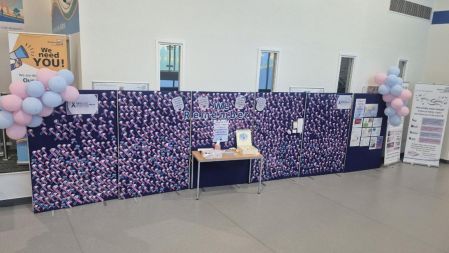
Families affected by baby loss are also supported by a range of national and specialist organizations. These services offer emotional support, practical advice, remembrance resources and peer support for mothers, fathers, parents, siblings and other family members and friends.
Sands (Stillbirth and Neonatal Death Charity)
Provides national helpline support, local support groups, online communities, and bereavement resources for anyone affected by baby loss. Find out more on their website. The local branch of Sands: Blackpool and Preston Sands can be found on Facebook and hold regular meetings and support events throughout the year.
Supports families when a baby or child dies, or when a child is facing bereavement in the family, offering both emotional and practical support. Find out more on their website.
Provides information and support for pregnancy loss, stillbirth, and neonatal death, as well as research into preventing baby loss. Find out more on their website.
Offers comfort teddy bears and ongoing emotional support for families following baby loss. Find out more on their website.
ARC (Antenatal Results and Choices)
Supports parents receiving antenatal diagnoses and those facing difficult decisions or baby loss following diagnosis. Find out more on their website.
A peer support organisation for parents affected by termination for medical reasons (TFMR). Find out more on their website.
Provides support specifically for fathers grieving baby loss, miscarriage, and neonatal death. Find out more on their website.
Offers counselling, support groups and remembrance services for families affected by baby and child loss. Find out more on their website.
Ellie’s Gift is a free support app designed to support someone through the birth of a baby that has died, offering practical advice, emotional guidance and resources around anxiety and mental wellbeing. It includes audio and video tracks, self-care tools after loss and structured courses to help families cope before, during and after bereavement. Find out more on their website.
The Compassionate Friends (TCF) is national charity providing peer support to bereaved parents, adult siblings and grandparents who have experienced the death of a child, sibling or grandchild. The website includes lots of helpful resources and the charity hold events throughout the year, bringing bereaved families together. Find out more on their website.
The link below will take you to the post-bereavement Occupational Therapy support page which contains various YouTube videos providing support and advice.
Visit this page to find out more: Post-bereavement Occupational Therapy support :: Blackpool Teaching Hospitals.