
You may be feeling anxious about being in hospital but keeping you safe and well is a priority for the staff looking after you. There are also some simple things you can do to help keep yourself safe during your hospital stay, such as asking for help when needed, protecting yourself from slips and falls and helping to prevent blood clots.
This video provides our top tips on keeping yourself safe during a hospital stay.
Lighting:
All bay lights to be dimmed or turned off by 11pm unless there is a special circumstance or an emergency.
Be mindful of talking loudly:
Reducing the volume at which you speak can ensure other patients have a more rested night.
TV/Mobile phones/Tablets:
Please turn these off after 11pm. If you want to use these devices after this time please consider headphones or turning the device to silent. You can use subtitles on your device or TV if you want to watch a programme with the volume down.
Noise issue:
Please report any noise issues to staff so it can be addressed quickly. We have ear plugs available, please ask a member of staff for these. Be aware that not all bins are soft closing on the ward, consider if you need to use these between 11pm and 6am.
Ensuring good nutrition and hydration while in hospital, whether that be for yourself or a loved one, is so important to minimise the risk of weight loss, including muscle loss, and to optimise recovery from illness or surgery. If we are not eating or drinking enough to meet our needs, we risk longer hospital stays and further risk of infection and/or poorer health outcomes.
Here are some top tips to improving nutritional intake while in hospital:
- Choose 'high energy' meal options from the hospital menu (labelled HE) with a heart symbol. Write x2 on the menu to request a larger portion size
- If you're suffering with poor appetite, avoid filling up on soups and go straight for your main meal. Always opt for a pudding to increase your energy levels and protein intake
- Opt for nourishing drinks between meals such as whole milk, Horlicks, Ovaltine, hot chocolate and milkshakes to improve hydration levels and your energy and protein intake
- Aim to have two to three snacks a day between meals, all high in energy and protein. Examples include: creamy yoghurts, cheese and crackers, scone with jam and cream, cream/chocolate biscuits and mixed nuts
- If you're struggling to finish your meals, aim to have smaller frequent snacks throughout the day. Your family and friends can bring in your preferred non-perishable snacks from home
- Fortify your meals to increase your energy and protein intake such as adding extra butter to toast, sandwiches and potatoes, and adding cheese and sauces to mail meals
What if I require assistance with my eating and drinking?
Your family and or/friend can offer to help at mealtimes once agreed with the ward staff. Alternatively, our staff can support you at mealtimes. If you have a hospital passport or a ‘this is me booklet’, your family/friends can help you to complete this to allow the nursing staff to understand your food preferences, likes and dislikes and if you have any additional assistance required. For example, if you struggle with your grip strength, we have a finger foods menu available!
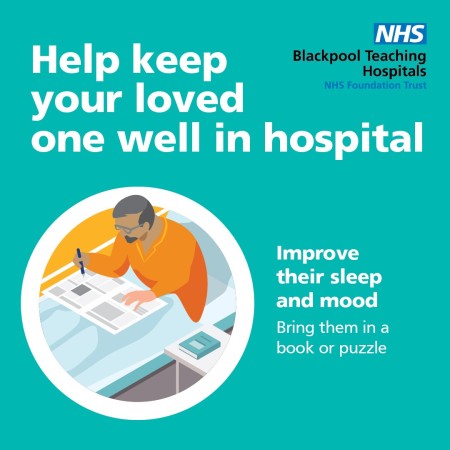
Sleep is as important as eating, drinking and breathing.
It allows our bodies to repair themselves and our brains to consolidate our memories and process information.
When someone comes to visit you consider asking if they can bring some ear plugs, a sleep mask, book or puzzle to help you sleep.
Feel free to visit our Patient Library which can be found on the first floor of the Berry Offices. There are a large variety of books that will suit all interests.
Patients are able to freely access books during their stay and are also welcome to take the books home.
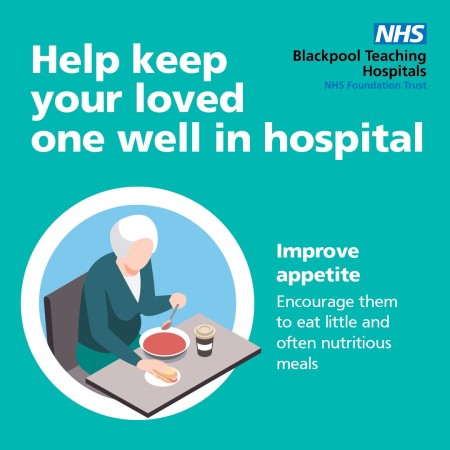
For whatever reason you or a loved one is in hospital it is very important to eat well to aid recovery. Eating little and often small and nutritious meals will help to:
- Fight infection.
- Give you more strength to move around and breathe better.
- Stay in hospital for less time.
If you are visiting a loved one ask them if they'd like any snacks bringing in to help with their appetite. Always choose full fat and full sugar food and drinks.

While in hospital, older people can spend up to 83% of their time sitting in bed.
You can help keep a loved one well in hospital by reducing the risk of pressure sores.
- Help them walk around the ward, if their medical team say it is ok.
- Encourage them to change position if they are in bed when you go to visit
- Ask staff for extra pillows or mobility aids if needed.

You can help reduce the risk of falls during a stay in hospital by:
- Informing the medical team if they are at risk of falling
- Informing the medical team if there has been a fall in the last year
- Informing the medical team if they seem more confused or feeling dizzy
- Informing the medical team if they wear glasses or a hearing aid but are not using them
- Keeping around their bed clear of hazards.
- Taking them appropriate footwear.
- Helping them use mobility aids if appropriate.
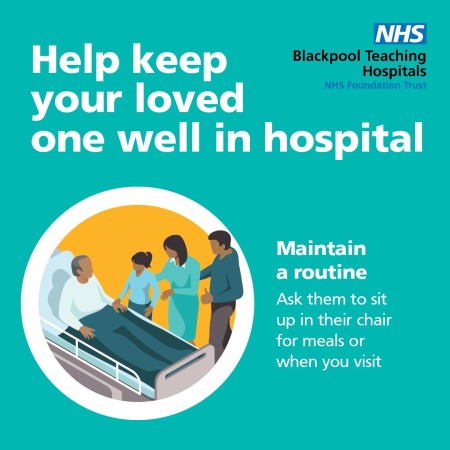
Help your loved ones maintain as much as a normal routine as possible while they are in hospital.
When you visit, encourage, if appropriate your loved one to sit up for meals like they would at home.
Being in hospital can make it easier to just stay in bed, but lying down all day makes our muscles weaker. The longer they stay in a hospital bed, the harder they may find it to get up and about as they get better.
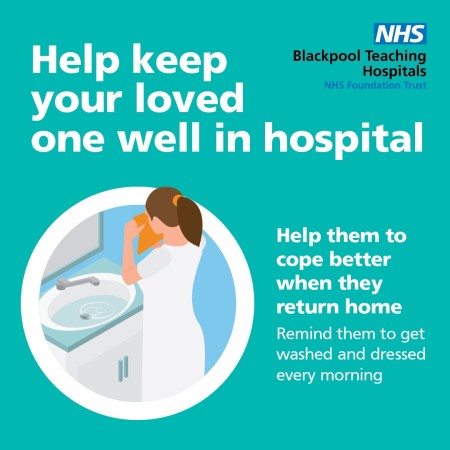
Sticking to a routine that is similar to what they do at home, such as getting out of bed, getting dressed or walking to the bathroom, can help to aid their recovery.