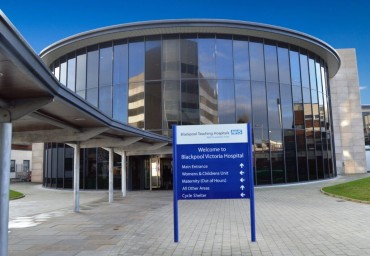

Welcome to Blackpool Teaching Hospitals NHS Foundation Trust
We aim to provide the highest standards of care and hope that your stay will be as pleasant and comfortable as possible. If you have any questions, please speak to a member of staff who will be happy to help.
This leaflet is designed to provide you with information which may help you to prepare for your admission.
What to do if you are unable to attend the hospital
If you are unable to accept the appointment offered, or you are unable to attend for any reason, please let us know as soon as possible so that we can offer the appointment to another patient.
Please use the contact number on your letter or telephone the hospital on 01253 300000 and ask for your Ward or Department.
Preparing to come into hospital
You will need to make arrangements to be admitted to hospital. There are lots of things to consider, here are a few reminders.
Arrange your transport to get to hospital. If you need an ambulance, book it at least a week before your admission date if possible. You should do this via your GP.
Arrange for someone to look after your house and consider giving a spare key to someone you trust. If you have pets these will need caring for whilst you are away.
What to bring into hospital with you
To make your stay more comfortable you should bring the following personal items with you:
Toiletries and essentials such as:
• Hairbrush, comb and shampoo.
• Toothpaste, toothbrush, denture pot, denture cleaner.
• Soap, face wash, shower gel, moisturiser, deodorant.
• Towels, face cloth, sponge.
• Hand wipes, tissues etc.
• Shaving equipment.
• Sanitary care.
• Also a change of nightwear and underwear, slippers and dressing gown.
• Some casual loose clothing to wear during the day, as you will be encouraged to mobilise once you are able.
• All tablets and medication in their original containers that you are taking. Do not bring medicines you have been asked to leave at home by your nurse practitioner.
• Your benefit / pensions book number.
• Names, addresses and phone numbers of your next of kin and your GP details.
• A list of questions or concerns you may wish to talk about with your medical team.
• Books, magazines, knitting, writing material and small change for the telephone, newspapers, etc, and card to buy TV time.
• Any aid such as hearing aid, spectacles, magnifying glass, walking stick, zimmer frame, wheelchair etc.
• This leaflet.
If you forget to bring any of these items with you, please speak to a member of staff.
If you do bring personal items, please keep these safe and store them safely. Where possible please label them. Please limit items as locker space is limited.
Items we advise you NOT to bring
Please do not bring or keep the following items with you whilst in hospital:
• Any valuables or large amounts of money. You will need some money or a credit / debit card to use the bedside entertainment system. Please keep this to a minimum.
• Jewellery – Please limit the amount of items you bring with you. If you arrive with any valuables it may be advisable to put them into the hospital safe. Please discuss this with a member of staff when you arrive.
• Too many items of clothing. There is limited space on the wards and you will have difficulty storing large amounts of clothing. Please ask a friend or relative to take home any suitcases or big bags after you arrive.
• Alcohol, illegal drugs, cigarettes, tobacco or e-cigarettes. The hospital has a no smoking policy which must be adhered to at all times.
• Perishable food items other than fruit
Travel information
Trains
Blackpool North is the nearest railway station to Blackpool Victoria
hospital. For further travel information and timetables including
Stagecoach, visit www.traveline.org.uk or Tel 0871 200 2233.
Buses
For current bus services contact Blackpool Transport on 01253
473001 or www.blackpooltransport.com.
Car Parking
A travel leaflet including a site plan which identifies the location
of wards and car parks is available from the Trust Travel Website
www. bfwhospitals.nhs.uk.
When parking in pay and display car parks, please display your ticket
clearly on your windscreen. At peak times you may have to wait for
a space to become available. However, there are usually spaces
available in the multi-storey car park opposite the hospital main
entrance.
Registered Disabled Drivers
There are designated parking spaces throughout the hospital site,
close to the hospital entrances, for drivers who hold a council issued
Blue Badge parking permit.
Parking Rules
Vehicles in breach of car parking rules, which are displayed in the car
parks, may be subject to a Parking Enforcement Notice.
For further car parking information, the Car Park Office is situated on
the ground floor of the main entrance car park or can be contacted by
telephone 01253 956970.
Planning your stay
My to do list
I know my expected date for going home.
I have informed the relevant people where I will be.
I have all my medication ready to take with me.
I have packed a small bag with toiletries.
I have arranged my transport for getting THERE and BACK.
I have checked I have the right equipment and support for when I get home.
I have some non-perishable foods in for my return home, including long life or dried milk.
Write a list of questions I want to ask so I don’t forget.
Some of these questions may be:
• When can I have a shower or bath?
• When can I drive again?
• When can I go back to work?
• Who can I contact if I have any concerns or questions when I get home?
• I know where to go on my day of admission.
• I have the following details?
I am expecting to stay in hospital for ___________________ nights.
I can eat and drink normally until_____________________________
I can have clear fluids until: ________________________________
I must be nil by mouth from:________________________________
Medication instructions: _ __________________________________
Preparing for your admission to hospital
Smoking and Alcohol
Please note this is a non smoking hospital
If you do smoke or drink please use this as an opportunity to stop or
cut down. This helps speed up the healing process, your recovery
and reduces the risk of complications. For smoking cessation advice
contact Quitline, your GP or local pharmacist.
Quitline: 0300 123 1044
If you require support with stopping alcohol please ask the nurses to
contact our Hospital Alcohol Liaison Team (HALS).
You will receive your admission to hospital details by post. You will
normally be admitted on the day of surgery, but occasionally the day
before surgery. If this is necessary you will have been informed of this
beforehand.
Your admission date and time is not guaranteed, as Blackpool
Teaching Hospitals NHS Foundation Trust operates an emergency
service, patients requiring emergency care take preference. If the
hospital is full or your surgeon has to deal with emergency cases, your
admission may be deferred, however this is extremely rare.
All patients undergoing elective surgery will have their anaesthetic
management considered either by a member of the surgical staff,
nurse practitioner or an Anaesthetist. This may take place in a preoperative
assessment clinic or on the day of admission. There are
different types of anaesthetic, which the Anaesthetist will discuss with
you. He/she will advise you on the best option for you.
You will be admitted to the Surgical Admission Unit or Day Surgery
Unit / Surgical Ward, where you will be seen by the Doctors and the
Anaesthetist. The nursing staff will prepare you for Theatre and escort
you to Theatre when you are ready. Following Theatre you will be
transferred to a Ward until you are ready to be discharged home.
It is important that you bring your current medication in with you so
that the correct medications can be prescribed. This medication will be
returned to you. Please do not bring in those medicines you have been
asked to leave at home by your nurse practitioner.
If you are having bowel or breast surgery you will be visited by a Nurse
Specialist who will discuss the operation and after care with you. You
will probably have met your Nurse in clinic but if not you will meet her
on the ward.
You must stop drinking fluid TWO hours prior to your admission for
surgery, but you may take a small sip of water to help swallow tablets if
necessary. The nurses MAY offer you a drink of water once they know
a more exact time for your operation.
You will not be allowed to eat anything for several hours before the
operation. This will help ensure your stomach is empty and prevent
vomiting during the operation. The starvation rules apply to procedures
involving a general anaesthetic (where you are asleep and unware of
what is going on) and also regional anaesthetics (where part of your
body is made pain free). You will be given specific information about
eating and drinking by your nurse.
Taking regular medication prior to surgery
It is important that you do not miss out more tablets than necessary.
For patients attending on the day of surgery this means taking your
normal medication before you come in. Drugs may have to be altered
or stopped before an operation (e.g. warfarin, insulin, tablets to reduce
blood sugar, certain blood pressure tablets). The nursing staff will
assess this during the preoperative assessment and give you written
instructions. If in doubt phone preoperative assessment on 01253
955603 or 01253 956547.
Consent for your treatment
The Doctors, Nurses and Therapists will ask you to agree to any form
of examination, treatment or care. It is important that you feel you
have been given enough information before you agree to particular
aspects of treatment. You are always free to say no or to ask for more
information.
Your Operation
Most patients attending either Day Case or Inpatient Surgery will walk
the short distance from the waiting area to the Theatre Suite. It is no
longer normal practice to administer sedative premedication before
surgery.
Once in the anaesthetic room routine monitoring devices will be
attached to you. for example ECG and a blood pressure cuff. You will have an
intravenous cannula sited (put into your vein) which may have a fluid
drip attached to it.
Patients having surgery under regional anaesthesia (that affects
only part of your body) will then have the appropriate injection
delivered into their back. For patients going to sleep, an oxygen mask
may be placed over your mouth and nose and a drug will then be
administered through the cannula. The drug works very quickly and
you will fall asleep in a few seconds.
What happens after the operation
After the operation you will feel sleepy due to the anaesthetic.
You may experience some discomfort when you wake. You will be
given medication to help relieve the pain.
Almost all patients will spend some time in the recovery or
Postoperative Care Unit after they wake up. During this time you will
be closely monitored and any concerns regarding your condition will
be addressed. You may be offered a drink of water during this period.
Once the surgical and anaesthetic teams are happy with you, you
will be discharged from the Theatre Suite to an appropriate Ward in
the hospital. You and your attendants will have been notified of your
final ward placement prior to surgery. It is not usual for visitors to be
allowed access to the recovery area.
You may have a wound and a wound drain, which will drain away any
blood or fluid that collects at the wound site. This will help to prevent
any bruising or swelling.
The wound will be covered with a large plaster and will be left
undisturbed for a couple of days. The wound clips will stay in place for
7-10 days. If you have left hospital, the District Nurse will visit you to
remove them. On some occasions the operation can be done without
an external wound. However you will have a wound inside the body
and this also needs to heal.
You will be given oxygen via a nasal cannula (nose tube) or facemask
for a few hours after the operation. This will help you recover from the
anaesthetic. The Nurses will record your pulse and blood pressure
regularly and make sure you are comfortable.
If you have pain please let the nurse know. You may be asked to wear
compression stockings throughout your stay in hospital. As you will be
doing less exercise than usual, the blood flow to your legs will become
slower. The stockings will help to increase the blood flow and help
prevent complications such as deep vein thrombosis (DVT). You may
also receive daily injections to help prevent a DVT.
You may stay in bed overnight after some operations but most
patients will be encouraged to get out of bed on the day of surgery as
this aids your recovery. It is important to remain as mobile as possible
during your recovery. The Nurses and Physiotherapists will advise
you.
If you smoke you may have some problems with your chest after
surgery. Smoking can increase the risk of postoperative complications
which includes chest infections and increased coughing.
The amount of time you need to take off will depend on the nature of
your work and the type of surgery you have had. If you need more
time off please visit your GP who will advise you further.
You will not routinely need to visit your GP when you are discharged
home. However if you experience:
• Pain that does not go away with the medication.
• High temperature, nausea, vomiting.
• Increased swelling, redness, heat around wound site.
• Generally feeling unwell.
• Symptoms which cause you concern.
Make an appointment to see your GP who will provide you with advice
/ treat you.
Pain relief after your operation
An operation will inevitably result in some pain/discomfort. What you
experience may not be the same as your family or friends. We will
treat your pain by giving suitably selected from the list below.
During your hospital stay we aim to provide good pain relief that will
allow you to move, take deep breaths and cough. This is essential to
help prevent you from suffering post-operative complications such as
a chest infection or deep vein thrombosis.
Acceptable pain relief is a pain level that is not too distressing and one
that allows you to rest, sleep, move, eat and continue with your daily
activities of living. You will be asked regularly about your pain.
The Doctors and Nurses taking care of you will ask you to give your
pain score from 0 to 3. (0 being no pain and 3 being severe pain) This
will guide us in selecting the suitable pain relief medicine for you. If
you are not getting adequate pain relief, you need to make it clear to
us that you are continuing to experience pain. It may be that the type
of pain relief you have been given needs changing or increasing in
amount.
There are several ways to control your pain after an operation.
The Anaesthetist will advise what type of pain relief is best for you
depending on the type of operation you have had and your past
medical history. The different types of pain relief include:
Tablets or syrup / liquid
You will need to be able to drink and not feel sick before taking these
pain relief medicines. They may take 30-45 minutes to work and it is
important that you take the medication before the pain becomes too
bad.
Injections
These can be used if you are not eating and drinking properly. They
are given either into your drip or through a small needle just under the
skin in your arm or thigh. These usually take 20 minutes to work.
Topical patches
Morphine based patches may be used to provide pain relief in the
short term especially if you are unable to eat or drink normally.
Patient controlled analgesia
This is a locked electronic pump linked to a drip that you use yourself
to administer a small amount of strong pain relief medicine (usually
morphine) into the drip every few minutes, this is done via a handheld
remote button. The pump has safety mechanisms to prevent over use
but will enable you to control the amount that you need. If you require
this type of pain relief further information will be given to you at the
time.
Local anaesthesia and regional blocks
A one off dose of local anaesthetic medicine as an injection may be
given in the anaesthetic room before the operation starts, it may be
done whilst you are awake or asleep. This will be discussed with you
by the Anaesthetist prior to the operation. It will numb the area which
is being operated on and will stay numb for up to 24 hours after your
operation. Continuous local anaesthetic infusions via a specialised
pump may be used to provide even longer lasting pain relief if you
have had major surgery.
Epidural infusion
A fine tube is placed in your back so that pain relief can be
administered. This will numb the area and can be continued for a
few days after the operation. If this type of pain relief is required, the
Anaesthetist will discuss this with you in more detail. After the epidural
is removed you will be given tablets or syrup to control any pain.
Spinal anaesthesia
An injection of local anaesthetic medicine is placed into your lower
back to provide anaesthesia during your operation as well as pain
relief after the operation is complete. This is routinely performed as
part of our enhanced recovery programme for major surgery.
Side effects
Sometimes pain relief medicines may have side effects including
nausea, vomiting, dizziness, feeling drowsy, itching and hallucinations.
Most of these can be easily treated if you tell us that you are
experiencing them.The treatment may include changing to alternative
pain relief, reducing the dose or giving other medication to counteract
the side effects.
Acute Pain Service
We have a dedicated Acute Pain Service consisting of Acute Pain
Specialist Nurses and a Consultant Anaesthetist to provide advice
and review patients before, during and after their surgery.
Preventing infection
Blackpool Teaching Hospitals NHS Foundation Trust takes the
prevention of infection very seriously. There are many things you can
do to help prevent infection. These include:
• Having a bath or a shower the day before, or on the day of surgery.
• Do not shave around the area where surgery will occur.
• Bring in your own personal toiletries. Do not borrow other patients toiletries.
• Always wash your hands after using the toilet / commode / bedpan. If you are unable to reach a sink, please ask one of the nursing staff to provide you with hand wipes.
• Wash or clean your hands before and after eating.
• Hospital staff must wash or sanitize their hands with gel before
they examine you or perform a procedure. If they fail to do this
they could be contaminating you with bacteria. Please challenge
any member of staff if you do not see them clean their hands or
feel free to ask them the question ‘Have you washed / cleaned
your hands?’.
• Your bed and ward area should be cleaned regularly. If you
are not happy with the standard of cleanliness or you see that
something has been missed, please report this to the Nurse in
Charge or ask to speak to the Matron.
• Try to keep the top of your locker and bed table free from clutter
so that the area can be cleaned properly.
• Please encourage your visitors to use the hand gel available to
them at the entrance to the ward. They should use it on entering
and leaving the ward.
• Please ask your relatives not to sit on your bed.
Monitoring surgical wounds for infection
Many micro-organisms (germs) live in and on our bodies and also in
the environment. Most germs are harmless and some are even useful.
A surgical wound infection occurs when germs enter the incision (cut)
that the surgeon makes through your skin in order to carry out the
operation. A surgical wound infection can develop at any time from 2
to 3 days after surgery until the wound has healed. Very occasionally,
an infection can occur several months after an operation.
Surgical wound infections are uncommon. During your stay in
hospital, the Nurse who changes your wound dressings will check
for any signs of infection. It is important that you do not remove the
wound dressing, or touch your wound or wound drain. You could
accidentally transfer germs from your fingers to your wound. Hands
must be washed thoroughly and dried before any contact with the
wound or dressing. If you are concerned about your wound, please
speak to the Nurse who is looking after you.
Infection can develop after you leave hospital. You may have an
infection if you develop the following symptoms:
• The skin around your wound gets red or sore, or it feels hot and
swollen
• Your wound has a green or yellow coloured discharge.
• You feel generally unwell or feverish, or you have a temperature.
If you experience any of these symptoms, you should contact your
GP. If your GP or the hospital think you have a wound infection, a
swab will be taken from your wound and sent to the laboratory for
testing. The results will confirm any infection and identify the best type
of treatment for you.
Slips, trips and falls
There is a leaflet called “How to stay safe in hospital” that will be
placed by your bedside – please read it and follow its advice to help
reduce your risk of falls.
Privacy and dignity
Throughout your stay your privacy, dignity, religious and cultural
beliefs will be respected. You will be cared for in a single sex bay
within a ward unless you require high dependency care. Some single
rooms are available, however priority is given to patients whose
condition requires this type of room.
Medical Doctors
Blackpool Teaching Hospitals is involved in training Medical Students.
Students learn a great deal from talking to and examining patients and
your co-operation is greatly appreciated. However, your right to refuse
the presence of students will be respected and such a refusal will not
affect the standard of care or attention you receive.
Visiting
Each ward has their own visiting hours so please check with the ward
when you arrive. Please adhere to TWO visitors per bed at one time
and ask that your visitors respect all patient’s needs for rest, treatment
and privacy.
Visitors are asked to assist us in protecting our patients from infections by:
• Staying at home if they have a cold, infection or stomach upset and
only visiting when they have been free of symptoms for 48 hours.
• If your visitor feels your visit is essential, please contact the ward
to speak to the Nurse in Charge before they visit.
• Keep children, especially babies at home.
• Washing their hands before and after they visit.
• Using chairs at patient’s bedsides to sit on and not on the patient’s beds.
Telephones
Mobile phones can be used in most areas of the hospital but
reception may be limited. Please be discreet when using your phone
and be considerate to other patients. In some areas, mobile phones
should not be used as they interfere with vital monitoring equipment.
Please discuss using your mobile phone with a member of staff.
Patientline
Patientline is your personal TV, telephone and free 24 hour radio
service at the bedside. Instructions are on the TV screen. You will
need to pay for viewing the TV and for any calls that you make. There
are machines available by the wards to purchase a viewing card,
please see them for further information.
Sharing information with your friends and family
Whilst you are in hospital, your condition and treatment will be fully
discussed with you. Your right to confidentiality will be respected and
upheld and you will have the right to choose whom information about
your condition is given to. Unless you give us permission, we will
be unable to pass on any information to your friends and relatives,
particularly by telephone. Please tell us who we can speak to about
your care.
When it is not possible to gain your permission, your treatment and
condition will be only discussed with your next of kin or the person you
have identified as the person to contact.
When if/the Ward staff feel that it is necessary to refer you to Social
Services, this will be discussed with you and your permission will be
sought. We only share essential information with other agencies.
Health and safety
All staff employed by the Trust must carry a photo identification
badge. If you are unsure who anyone is please ask to see their badge.
We aim to provide a safe and welcoming environment. We do not
tolerate anti-social behaviour, violence or discrimination of any kind.
If necessary we will take appropriate action.
Meals, restaurants and snacks
Drinks will be offered during the day. A meal is served 3 times a day,
based on a menu which you have chosen. They are usually served
around 8am, 12.30pm and 5pm. If you feel that the menu does not
cater for you, please speak to the Nurse in Charge.
A cafeteria which is open to the public sells snacks and drinks. Shops
are available on site both at the New Main Entrance and entrance
next to the Out Patients Department. Please ask permission to leave
the Ward, and tell a member of staff where you are going.
Protected meal times for patients is operational to ensure that patients
receive adequate nutrition and privacy during meal times. Visiting
during mealtimes will be discouraged unless specific requirements
have been identified.
Special needs and access to services / Disabilities
Our facilities for patients include drop off points and disabled car
parking spaces with wheelchair accessible entrances. If you have any
special requirements, including a learning disability or communication
needs, please contact the Nurse/Midwife in Charge of the Ward in
advance of your admission. Each ward has a designated link Nurse to
support any patient with a learning disability.
Interpreting service
A language interpreting service is available in the hospital. There are
also a number of staff who are able to interpret a variety of languages. If
English is not your first language or you have difficulty communicating or
understanding, please ask the staff to access the correct service for you.
Chaplaincy service
The Chaplaincy and Spiritual Care Department offer spiritual and
pastoral care to patients and carers. They offer a confidential listening
ear and, where appropriate, specific religious care.
If you would like to see a member of the Chaplaincy Team please ask
one of the Nurses on the Ward or contact them by telephoning the
Chaplaincy office on 01253 953876. There is a Chaplain on call for
emergencies 24 hours a day.
There is a chapel and prayer room situated in the hospital and you
are welcome to visit for a time of quiet prayer or thought. Details of
services held in the Chapel are available from the Team.
Comments, concerns and complaints
We welcome all comments on the service our Trust provides. Positive
feedback provides a welcome boost to our staff.
If you have any concerns while you are in hospital please tell a
member of staff about it straight away, as often they can be sorted
out immediately. All our staff will receive any comments professionally
and sympathetically and your care will not be affected in any way. If
you feel that your concern has not been resolved please ask to speak
to the Matron on duty.
The Patient Relations Department is available for raising concerns or
to obtain advice and the service is confidential. They are situated at
Victoria Hospital and Clifton Hospital. Opening hours are Monday to
Friday 9am to 5pm. If you wish to meet with an officer please call to
make an appointment or ask the nurse to help you arrange this.
Victoria Hospital – 01253 955588
Clifton Hospital – 01253 956202
They can provide help with the following:
• Information about all NHS services across the Fylde Coast.
• Help you to sort out any concerns as quickly as possible.
• Listen to what you have to say about the Health Service.
• Make sure the NHS finds out from you what works and what needs changing.
• Advice if you wish to make a complaint.
If no one is available to take your call please leave a message on the
answer machine and one of the Patient Relations officers will get back
to you as soon as possible.
Some incidents can be more serious and require a quick and full
investigation. You can tell us about these either verbally or in writing.
A Patient Relations officer will make a record of your complaint and
report back to you quickly. If you are not satisfied with the outcome
you can put your complaint in writing to the Chief Executive. This
will be fully acknowledged in writing and will be followed by a full
investigation. When the investigation is concluded you will be sent a
letter of explanation.
To contact the Complaints Department, telephone 01253 955635. If
you wish to complain in writing your complaint should be addressed to
The Chief Executive, Blackpool Teaching Hospitals NHS Foundation
Trust, Whinney Heys Road, Blackpool, FY3 8NR. Please ensure your
name, address and telephone number are included in any letter of
complaint.
On receipt of your letter, your complaint will be logged and given
a registration number. You should use this number in any future
correspondence relating to your complaint.
Discharge arrangements
Please plan your discharge arrangement prior to coming into hospital.
Most patients return home, however some people will require extra
support which may include:
• Rehabilitation in another hospital.
• Short or long term placement in a residential or nursing home
• Carer support at home or in day care.
• Moving to a non acute hospital bed whilst awaiting for resources.
The Discharge Coordinator may visit you to assess your needs. They
can help you to prepare for your discharge.
Unless you require an ambulance to take you home, you will need to
arrange for someone to collect you from the hospital. If you have any
concerns regarding this arrangement please speak to the staff.
There may be occasions, such as the prevalence of a pandemic,
when the hospital has to change its procedures at short notice. This
may impact upon the things you and your visitors can and cannot
do when in the hospital to keep everybody safe. Any changes in our
hospital procedures will always be communicated to you prior to your
admission by our nursing staff.
We are aware this PDF are might not be accessible to all users. If you would like to request an accessible version, please contact bfwh.
Read our accessibility statement to learn more.
Author Surgical Division
Approved by SACCT Governance Meeting
Date of Publication 07/08/2024
Reference No PL/494 (v5)
Review Date 01/08/2027