
Ptosis
Your upper eyelid has been diagnosed as drooping,
this is a condition known as ‘‘Ptosis’’. It is caused by
weakness of the muscle that pulls the lid up.
This can generally be rectified by surgery which
is usually performed under local anaesthetic, as a
day case patient. The local anaesthetic injection is
somewhat painful but lasts only for moments.
An incision (a cut) is made in the skin of the upper
eyelid. The muscle under the skin is identified,
separated and re-attached in the usual position with or
without shortening, thereby elevating the eyelid to the
correct position.
During surgery, you will still be able to move your eye
and eyelid. You will be asked to look up and down to
try and help the surgeon get your eyelid in the correct
position.
Your surgery can take between 30-60 minutes per eye.
During this time you will need to lie flat on your back.
The surgical team will ensure you are comfortable, raising your legs and using supports.
Post-operatively your eye will be patched overnight and
the stitches in the skin are generally left to dissolve on
their own.
You will be required to put ointment in your eye and on
the scar and also put some drops or gel in to the eye.
The scar in your upper lid will disappear and blend in
with any skin creases/folds already present in your
eyelid.
Complications
Complications can include: bleeding, bruising,
infection, scarring, over and under correction,
asymmetry, reoccurrence of the ptosis. Bruising and
swelling is normal and will resolve in a couple of
weeks.
It is quite common for the eyes to feel gritty and
uncomfortable in the first few weeks.
There is a small risk of bleeding in the first 48 hours or
so. There is also a small risk of infection and scarring.
Post-operatively the height of your eyelid may not be
exactly at the desired position despite all precautions
being taken. In some cases further surgery may be
required either to elevate the eyelid further or bring
it down from an overly high position. Your doctor will
advise you about this following the surgery.
Over time, in the following weeks and months, the eye
lid may drop slightly. In the longer term there is a risk
of recurrence of Ptosis. Immediately after Ptosis surgery, the un-operated
opposite lid may drop somewhat. This is due to
neurological factors and may change over time.
General advice and information
The Ophthalmic Day Surgery Unit is a specialised Unit
which cares for patients undergoing eye procedures on
a day case basis.
The unit cares for women, and men.
There are separate toilet facilities for women, men and
disabled patients.
Where is the Ophthalmic Surgical Unit?
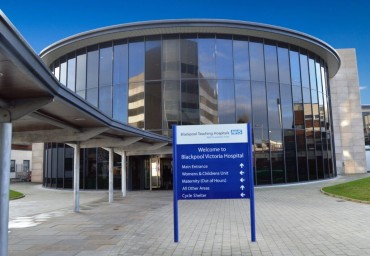
Enter the hospital using the Main Entrance where you
will find the retail stores.
Turn right up the stairs, escalator or lift. Go straight on
down the main corridor.
The Ophthalmic Surgical Day Unit can be found
approximately 200 metres down this corridor.
We are aware this PDF are might not be accessible to all users. If you would like to request an accessible version, please contact bfwh.
Read our accessibility statement to learn more.
Author Ophthalmic Day Surgical Unit
Approved By Ophthalmic Governance Meeting
Date of Publication 22/01/2025
Reference No PL/205 (v3)
Review Date 01/01/2028