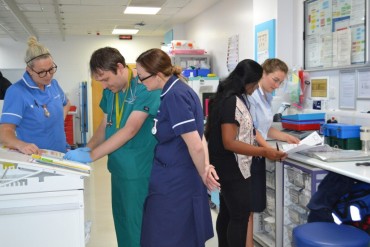

Hand Hygiene for Patients
Why is hand hygiene important?
Washing our hands or using alcohol hand rub is the most effective way of preventing the spread of common infections particularly when a patient is in hospital or receiving care in a community setting.
NB Patients and visitors must never touch any invasive devices e.g. cannulas for drips or urinary catheters, or a surgical wound or break in the skin as this increases the risk of the patient acquiring an infection.
At Blackpool Teaching Hospitals we are determined to minimise this risk by asking all staff, patients and visitors to adhere to the highest possible standards of hand hygiene at all times.
What is the best way to clean your hands?
Hands can be cleaned in several ways, all of which are effective in removing bacteria and viruses:
• Hand washing using liquid soap and warm water - see page 4 for hand washing technique
• Using alcohol hand rub which is available at various points in the ward and community settings - see page 5 for hand rub technique
• Hand wipes
When to clean or sanitise your hands:
• Prior to eating, drinking, and taking medicines
• After visiting the toilet – Always wash with soap and water
• After coughing and sneezing
• When hands are visibly soiled – Always wash with soap and water
• After contact with others
Hand Hygiene for Visitors
Visitors should clean their hands:
1. On entering a ward Use the alcohol hand rub located at the entrance to prevent taking harmful bacteria or viruses into the ward environment.
2. Before patient contact Clean your hands when approaching the patient at their bedside to protect the patients skin from harmful bacteria or viruses.
3. Before assisting with patient meals Clean your hands before you handle patients food to protect the patient from swallowing harmful bacteria or viruses.
4. After visiting the toilet or bathroom Please wash and dry your hands before leaving the toilet or bathroom to prevent you from spreading harmful bacteria or viruses around the hospital environment.
5. After contact with the patient surroundings Clean your hands when you leave the patients bed side to protect yourself and to prevent spreading harmful bacteria or viruses around the hospital environment.
Best Practice: How to hand wash step by step images Best Practice: How to hand wash
Steps 3-8 should take at least 15 seconds. Steps 3-8 should take at least 15 seconds
1.Wet Hands with water
2. Apply enough soap to cover all hand surfaces
3. Rub hands palm to palm
4. Right palm over the back of the other hand with interlaced fingers and vice versa.
5. Palm to palm with fingers interlaced
6. Backs of fingers to opposing palms with fingers interlocked
7. Rotational rubbing of left thumb clasped in right palm and vice versa
8. Rotational rubbing, backwards and forward with clasped fingers of right hand in left palm and vice versa
9. Rinse hands with water
10. Dry thoroughly with towel
11. Use elbow to turn off tap
12. your hands are safe.
Best Practice: How to Handrub step by step images
1. Apply a palmful of the product in a cupped hand and cover all surfaces
2. Rub hands palm to palm
3. Right palm over the back of the other hand with interlaced fingers and vice versa
4. Palm to Palm with fingers interlaced
5. Back of fingers to opposing palms with fingers interlocked
6. Rotational rubbing of left thumb clasped in right palm and vice versa.
7. Rotational rubbing, backwards and forwards with clasped fingers of right hand in left palm and vice versa
8. Once dry, your hand are safe
We are aware this PDF are might not be accessible to all users. If you would like to request an accessible version, please contact bfwh.
Read our accessibility statement to learn more.
Author Infection Prevention Department
Approved by WHIPC Committee Meeting
Date of Publication 19/03/2024
Reference No PL/184 (v5)
Review Date 01/03/2027