
Food Challenges and Supervised Feeds are tests that are
performed in hospital to see if your child is allergic to or able to
tolerate a particular food. The aim of this leaflet is to give you an
explanation of what to expect when your child has a Food Challenge
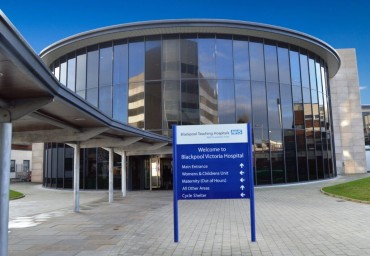
or a Supervised Feed with the Allergy Team at Blackpool Victoria
Hospital. If you have any questions or concerns, please do not
hesitate to contact the clinic staff on 01253 953651 Monday to
Friday, 9am to 4pm.
A Food Challenge is when a certain food, which we suspect your
child may have an allergy to, is fed to your child under medical and
nursing supervision in the children’s outpatient clinic. This is done by
gradually giving bigger doses of the suspected food over a certain
amount of time until a reaction occurs or the ‘top dose’ is eaten
without any adverse reaction. The ‘top dose’ is what a child would be
expected to eat in a normal portion. A Food Challenge can last 4-5
hours.
A Food Challenge will have been decided upon if allergy tests are
inconclusive or if we think your child may have outgrown their allergy
but has had a significant reaction in the past.
A Supervised Feed is similar to a Food Challenge; however, your
child will only need to eat one ‘dose’ of the food. This will be a similar
sized portion to what you would expect your child to eat in normal
circumstances. It will be given over a period of thirty minutes to
mimic a normal meal. A Supervised Feed normally lasts for 2 hours.
Supervised Feeds are usually performed only if the risk of your
child having an allergic reaction is very small. This means that a
supervised feed will only be suggested if your child’s allergy test
results (whilst not being completely negative) indicate that your child
will tolerate the food.
Preparing your child for their visit to the hospital will help them
understand what is happening and can improve their willingness
to co-operate. Talking to your child in advance will give them the
chance to ask any questions or voice any concerns they may have.
Explain they should only have to stay in hospital for half a day.
• 5 days before the challenge stop all antihistamines.
• Asthma inhalers and eczema creams should not be stopped.
• If your child is/or has been started on any oral steroids please
contact us before the challenge to discuss. Do not stop them.
• If your child is on medication that are not mentioned or if
you have any questions about medications, please call us in
children’s clinic to discuss. Do not stop them.
Your child needs to be fit and well to undergo the challenge.
If your child has symptoms of a cough or cold or diarrhoea or if they
have been using their rescue inhaler more frequently in the week
before the challenge please contact us.
Leave plenty of time to travel to the hospital and to find parking, if
necessary.
Pack some small familiar toys and books as distractions for small
children, as challenges can be stressful for them. Older children
should also bring distractions (personal music players, portable
video game systems, books).
If we need you to bring food for the challenge we will have let you
know in the appointment letter.
If you think your child will be reluctant to eat the challenge food you
can bring other foods to hide it in (but only foods that you know your
child can tolerate). Cow’s milk challenges are more successful if milk
is mixed with your child’s regular milk. Crackers or raw vegetables
often make peanut butter easier to eat. Yogurt is also useful to hide
food in. Consider bringing a small treat to use as a reward after the
challenge.
Your child should have a very light breakfast before coming to the
hospital and bring a packed lunch.
On arrival your child will be seen by a member of the clinic staff who
will ensure your child is fit and well to undergo the Food Challenge or
Supervised Feed.
This process will begin with the nurse obtaining a Nursing and
Medical history whilst also obtaining a set of observations of
Temperature, Pulse Rate, Respirations, Blood Pressure, Oxygen
Saturation Levels, Weight and Height.
Parental consent will be obtained verbally. Please feel free to discuss
any concerns or questions at this time. We will also document any
rashes on your child’s skin.
If your child is having a Food Challenge they will be given increasing
amounts of that food every 15 minutes. Before each dose your child
will be re-evaluated. If you notice anything different about your child’s
appearance or behaviour point it out to the team.
If at any stage your child has an allergic reaction, the challenge will
be stopped and appropriate treatment and advice will be given.
Throughout the challenge or supervised feed your child must remain
in clinic and will need to stay for up to 1 hour after completion of the
challenge. However if they do have a reaction during the challenge
they possibly may have to stay longer or will be admitted to the
children’s ward for further observation.
If your child does pass the challenge or supervised feed you should
no longer avoid the food challenged. It can be introduced back into
their diet beginning on the day after the food challenge. It should be
eaten weekly.
If your child fails the challenge you should continue to avoid the food
challenged. This will be discussed in more detail before discharge.
If within 48 hours of the challenge, your child shows signs of an
allergic reaction such as:
• Red, raised, itchy rash
• Swelling to eyes/lips/face
• Tummy ache, nausea or diarrhoea
• Wheeze/persistent cough
• Runny nose/sneezing
• Dizziness/feeling faint/floppiness
Please treat as appropriate and let us know in children’s clinic on
01253 953651.
If your child has a severe allergic reaction, please call 999.
Author Lorraine Sanderson
Approved by Child Health Meeting
Review Date 01/05/2028