
Publish date: 9 October 2026
Sophie Lowe, a member of the Trust's Adult Integrated Respiratory Service, is sharing the story of her five-year-old son to raise awareness of his rare condition.
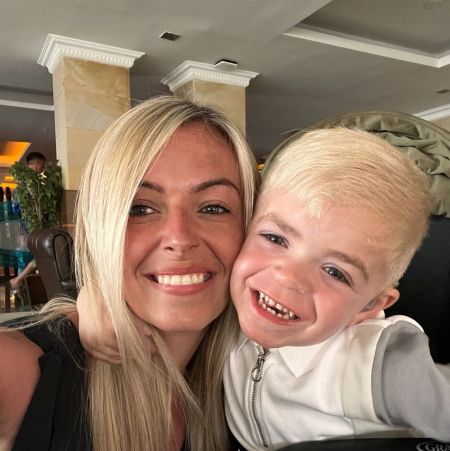
Sanfilippo syndrome, also known as Mucopolysaccharidosis type III (MPS III), is a rare, fatal genetic neurodegenerative disorder often called "childhood Alzheimer's or dementia." It is incredibly rare, occurring in roughly 80 to 100 babies every ten years.
Bobby was diagnosed after a visit to the speech and language therapy team because of a delay in his speech development which led to a further referral to ENT for hearing examinations. This then led to Bobby being under the audiology team and one consultant noticing some facial features that are indicative of the condition and raising a concern.
Sophie said: “The symptoms are similar in some respects to older people’s dementia in terms of the commonly known ones like memory or mobility as the child gets older but in babies, they aren’t always apparent. The key symptoms in children with Sanfilippo syndrome are around speech and language delay, frequent infections and mild physical features.
If it hadn’t been for the diligence of the teams making the referrals to other specialties and one person pulling it all together the condition in Bobby might have been missed. Instead, he was referred to Manchester for genetic testing where Sanfilippo syndrome was identified and the diagnosis made.
“To us he was our baby, you don’t notice things that others might call “abnormalities” you just brush them off because you love your child and you love them however they develop” Sophie said”
Bobby is now under the care of speech and language therapy, ENT, dietetics, the cardiac team, community audiology and the paediatrician team both at Manchester and here at BTH under Dr Mohanty and Dr Aftab.
Alongside her fundraising for support for Bobby who needs special equipment to support feeding and mobility, Sophie says she has a busy time coordinating all the appointments.
“You end up acting as an MDT coordinator sometimes, he can have multiple appointments a week! It’s thanks to everyone’s specialist input though that we have developed good relationships with all the teams and we couldn’t possibly arrange everything without their support and understanding. That relationship is key and I am so grateful for it.
“Our priority now is making sure Bobby gets the most out of his short life expectancy. He loves animals, tractors and nature so we want to spend as much time as we can giving him the chance to experience life as much as he can; and to get as much quality time with him while he is around.”
Sadly, children with Sanfilippo syndrome rarely live beyond their early teens.
Despite childhood dementia being comparable in its mortality rate to childhood cancer, with 204 recorded deaths per year from the condition compared to 260 annual childhood cancer deaths Sophie says it is surprising fewer people are aware of it.
She said: “If it’s causing a similar number of deaths as childhood cancer then why aren’t we paying more attention to it? Some consultants we have encountered don’t know what it is”
“I do admit though that the consultants we have been involved with have done their best to at least familiarise themselves with the condition before we meet with them. I can often see a page on their screen which shows they’ve looked it up before we arrive. Again, this is something we have noticed that makes the appointment more person centred when a specialist has taken the time to check on our individual circumstances. That’s great but I want to do more to make people aware of the condition in the first place.