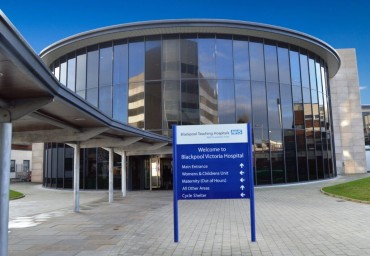

Here at Blackpool Victoria Hospital, we offer a one-stop clinic appointment for patient’s experiencing postmenopausal bleeding.
This appointment includes an ultrasound scan followed by a consultation with the Consultant. The Consultant will take a history of your medical problems, possibly perform an abdominal and vaginal examination and review your ultrasound scan. Depending on the findings from the scan and your clinical presentation, you will either be sent for more investigations, discharged from the service or undergo a hysteroscopy procedure.
There can be several causes of postmenopausal bleeding.
The most common causes are:
- Inflammation and thinning of the vaginal lining (atrophic vaginitis) or womb lining (endometrial atrophy) - caused by lower oestrogen levels,
- Cervical or womb polyps—growths that are usually non-cancerous,
- A thickened womb lining (endometrial hyperplasia) - this can be caused by hormone replacement therapy (HRT), high levels of oestrogen or being overweight and it can lead to womb cancer.
Less commonly, postmenopausal bleeding is caused by cancer, such as ovarian cancer and womb cancer.
Treatment for postmenopausal bleeding depends on what is causing it.
| Causes | Treatment |
|---|---|
| Cervical polyps | The polyps may need to be removed by a specialist |
| Vaginal or endometrial atrophy | You may not need treatment but may be offered oestrogen cream or pessaries |
| Endometrial hyperplasia | Depending on the type of hyperplasia, you may be offered no treatment, hormone medicine (tablets or an intrauterine system IUS)) or a total hysterectomy (surgery to remove your uterus, cervix and ovaries) |
| Side effect of HRT | Changing or stopping HRT treatment |
| Womb cancer | Total hysterectomy will often be recommended often followed by radiotherapy, chemotherapy, or hormone therapy, or a combination |
| Ovarian cancer | Surgery to remove your ovaries and sometimes, your womb (total hysterectomy). You may also have chemotherapy |