
Publish date: 10 March 2026
Healthcare Science Week brings together over 50 scientific specialisms and professional groups to celebrate and raise awareness of this diverse NHS Workforce.
Healthcare Science Week is taking place Monday, 9 to Sunday, 16 March this year.
NHS healthcare science plays a vital role in the diagnosis, prevention and treatment of disease and the health of our population.
Healthcare Science Week aims to showcase the work of healthcare scientists and inspire the future workforce.
Throughout the week we will be spotlighting some of the healthcare science roles we have working at BTH.
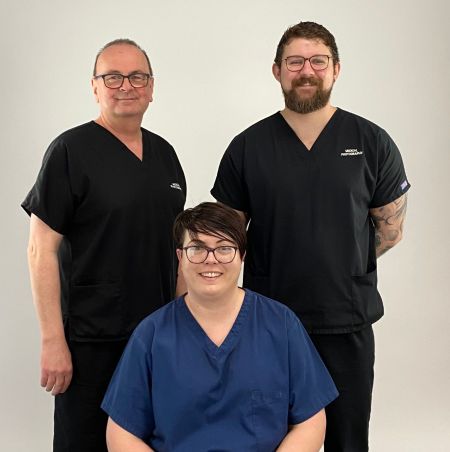
The team produces accurate, standardised photographic and video documentation of injuries, diseases, surgical procedures and medical conditions for clinical, evidential, and teaching purposes.
The team supports various specialties, including:
-
Dermatology,
-
Ophthalmology,
-
Paediatrics,
-
Tissue Viability,
-
Diabetic Foot,
-
Orthopaedics,
-
ENT,
-
Plastics,
-
Cardiology,
-
Accident and Emergency, and,
-
Critical Care.
Colleagues in the team also support our Maternity Bereavement team with remembrance photos. For this work they have previously been recognised as BTH’s Unsung Hero award winners at the Celebrating Success awards 2024 – the Trust’s annual staff recognition event. Read about their award here: “Always gentle, kind, caring and compassionate” team win Unsung Hero award :: Blackpool Teaching Hospitals.
Working in Medical Photography involves responding to requests from wards, theatres and clinics – while also supporting scheduled ophthalmology and dermatology services.
Paul Canning, Senior Medical Photographer said: “No two days are ever the same. One moment I may be seeing 40+ retinal patients in the Medical Retina Unit; the next, documenting open heart surgery, or supporting a bereaved family through remembrance photography, mentoring students and teaching photography to our many Community teams, or indeed running the Ederma two-week referral, fast track cancer moles clinic for Dermatology at Clifton Hospital.”
While the role requires strong technical foundation skills like lighting and colour accuracy, it is important to remember that it is a people-centred profession.
Paul also said: “Technical skill is vital – but compassion, communication and professionalism are just as important.
“You must be able to put anxious patients at ease, maintain dignity in intimate situations and remain calm in distressing circumstances.
“If you are curious, resilient, compassionate and technically precise, it can be one of the most rewarding careers in healthcare”.
Find out more about the clinical photography role here: Clinical photography | Health Careers.
Our Neurophysiology department, also known as the EEG department, conduct tests on the brain and nervous system.
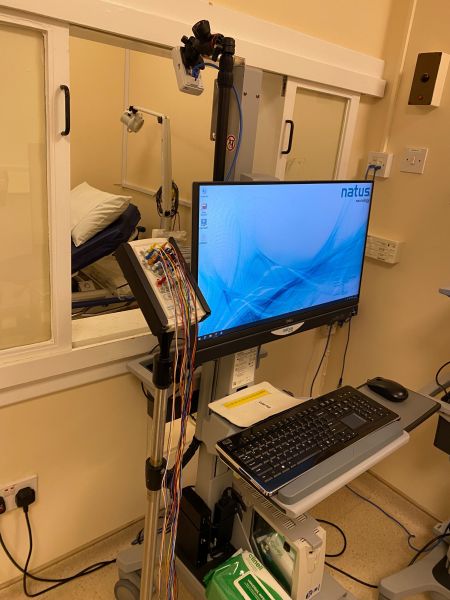
Brad Dixon, Clinical Physiologist, said: “These tests are really handy for testing for things like epilepsy. We also do nerve conduction studies to look for nerve problems in the hands and arms and VEPs to look for problems in the optic nerve”.
Visually Evoked Potential (VEP) is a test that looks at your visual pathways from your eye to the brain along the optic nerve to assess if it is functioning properly.
As a Clinical Physiologist Brad’s role is to look after the patient, carry out the required test and then write a report based on what he saw.
Most of Brad’s day is spent doing EEGs. These are performed in the department as Outpatients appointments or the team will also travel around the hospital performing inpatient tests.
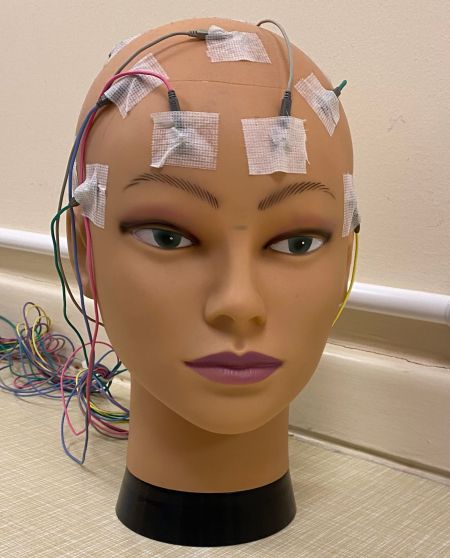
“The most critical skill a physiologist can have is an attention to detail, this is particularly important when making sure the electrodes are placed onto the patient’s head properly. This may sound like a small detail, but a proper connection is important for getting the most accurate signal from the brain!”
Brad’s advice to an up-and-coming physiologist would be to take the time to really talk to your patients.
“You’d be amazed at the useful clinical information you can get from someone’s history when you listen to their story. It also really helps a patient relax if they feel that their physiologist cares about what they are trying to tell them”.
Find out more about a career in Neurophysiology here: Neurophysiology | Health Careers.
Our Medical Microbiology department uses the study of bacteria, parasites, viruses, fungi and infectious diseases to select, perform and interpret appropriate tests for infection in patients. The team can test specimens from almost anywhere in the body for most infections. The clinical team in Microbiology will also advise on the treatment and management of patients with infections.
Once a source of infection has been identified they may also perform tests to see if the bacteria or fungi have become resistant to an antimicrobial drug. An antimicrobial is an agent that kills microorganisms, these may be known as antibiotics, antivirals or antifungals. Detailed and relevant clinical information is very important as it helps them to select the most appropriate tests and interpret the results correctly.
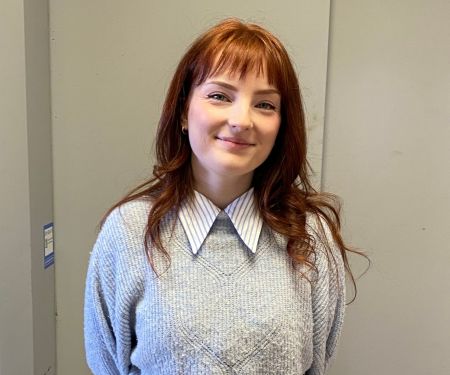
-
Developing her knowledge and experience in testing for and managing a range of infections,
-
Introducing new tests and methods to the laboratory,
-
Undertaking assignments and exams for university, and,
-
Creating a proposal and preparing for her Master’s project.
In Medical Microbiology it is important to keep your knowledge up to date as it is a field that is constantly evolving with new technologies being developed or new infectious agents and antimicrobial resistances appearing.
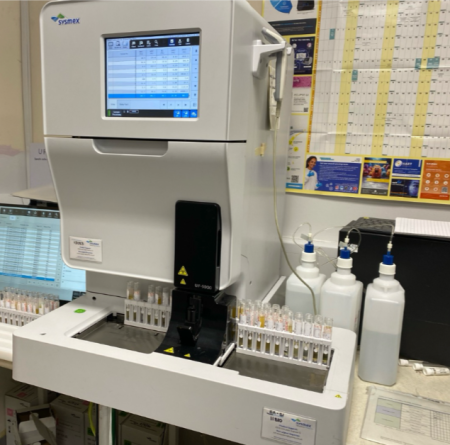
For anyone considering a career as a Clinical Scientist Caitlin recommends visiting the National School for Healthcare Science website and speaking to other Clinical Scientists about their role and asking about application tips.
Caitlin added: “Networking is a key skill for completing the programme and utilising your network to understand the application process will help with a successful application”.
Find out more about training as a Clinical Scientist here: Scientist Training Programme.
Our Cardiac Investigations Unit (CIU) is a specialised department that focuses on diagnosing heart conditions.
This includes both non-invasive investigations and invasive procedures. These tests aid a Cardiologist’s decisions and guide patients in their next steps of care.
Some of the tests performed by the physiology team are:
-
Electrocardiograms (ECG),
-
Exercise Stress Tests and Tilt Table testing,
-
Ambulatory Monitoring of ECG and Blood Pressure (BP),
-
Echocardiograms, including paediatrics and adult congenital clinic,
-
Cardiology Lab procedures such as Coronary intervention, Electrophysiology and Device Implant procedures, and,
-
Device Follow Up clinics, both face-to-face and remote monitoring.
Rachel Fishwick, Apprentice Cardiac Physiologist, said: “The information we gather from these tests play a key role in diagnosing heart conditions, guiding treatment plans, and monitoring ongoing cardiac health.”
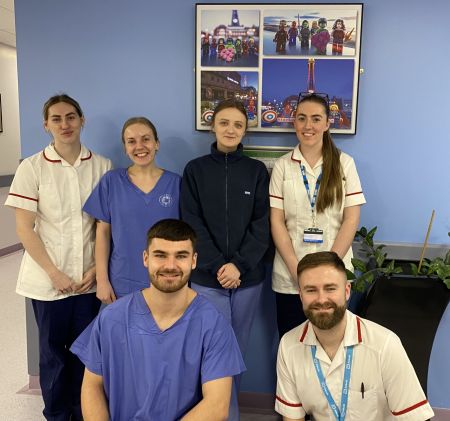
Katie has also recently started specialist training in cardiac rhythm management, such as pacemakers and implantable cardioverter defibrillator (ICD).
Katie said: “In pacing, we see patients through from their initial implant and then during follow-up for the rest of their lives. It is lovely to see the huge reassurance that lots of patient's feel knowing that their pacemaker or ICD is always there working to keep them safe”.
An aspect of her role that Natasha Ratcliffe, an Apprentice Cardiac Physiologist, values is the interaction with patients.
Natasha said: “I enjoy patient interaction the most, I enjoy talking to patients and trying to help them where I can, whether that's explaining a test or just being someone they can express their concerns too. Also, one of the most rewarding parts of working in the Cath Labs is seeing the direct impact of treatment in real time, especially if you've played a role in stabilising a patient and potentially played a part in life-saving treatment”.
To anyone considering a career in Cardiac Investigations Josh Cross, a Trainee Cardiac Scientist, advises: “Gain as much experience as possible before applying. This will not only help you strengthen your application but also help you decide whether the role and specialty are right for you.
“Develop strong organisation and time-management skills early. Protect your work-life balance. The workload can feel intense at times, so establishing healthy routines early on is important. Make full use of protected study time, plan ahead, and ensure you allow time to rest and reset.”
Michael Gardner, a Specialised Cardiac Physiologist training in Echocardiography, finds his role very rewarding and enjoys being part of a team which is able to make a difference to patients' lives.
Michael said: “Pursuing a career in Cardiac Physiology, whether that is wanting to work mainly in the Cardiac Cath Lab or specialising in echocardiography or pacing, is very rewarding and interesting. The work can be challenging but offers great progression and lifelong career skills”.
The Gastroinstestinal (GI) Physiology department, based within Gastroenterology, is responsible for conducting a range of diagnostic tests using specialised equipment.
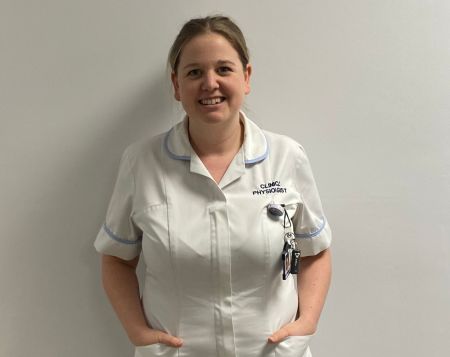
Patients may be referred to Ashley for a range of symptoms, including:
-
Difficulty swallowing,
-
Acid reflux,
-
Stomach pain,
-
Unexplained loose stools, and more.
Ashley has been in the department for over 14 years, and the service is constantly evolving due to new techniques, methods of reporting, and equipment becoming available.
Ashley said: “No two days are ever the same. Even though I have years of experience in the field, the learning never stops”.
When patients are referred to the department, they will already have undergone various other investigations and consultations with several conditions being ruled out which can leave them feeling quite deflated.
A key part of Ashley’s role is liaising with the patient, communicating with them and helping to put them at ease, especially for the more invasive tests. These tests involve a catheter (a tube) being placed through the patient’s nose into the stomach so pressure measurements can be taken of the oesophagus and the lower oesophageal sphincter (the area between the oesophagus and stomach) to ensure that all aspects of their swallowing are coordinating as expected.
Ashley added: “Knowing that my input into the patients’ journey will have a positive impact on them and hopefully improve their quality of life gives me a great sense of satisfaction”.
To anyone considering a career in GI Physiology Ashley advises: “Due to the pace of change in healthcare science, with research being undertaken all the time and new technologies emerging, you will always be challenged and have opportunities to make improvements. It’s therefore a very rewarding career as you always feel that you’re always learning something new and making a positive impact on patient care.
“It is so important to be able to converse with the patients and put them at ease; some of the investigations can be quite uncomfortable or patients may find the tests embarrassing, so being able to make the patient feel comfortable and at ease is sometimes the only way you will get results”.
Find out more about a career in GI Phsiology here: Gastrointestinal physiology | Health Careers.
The Respiratory and Sleep Department provides both Respiratory and Sleep diagnostic services; performing Pulmonary Function Testing which are non-invasive tests that measure how well the lungs work and sleep studies to detect Obstructive Sleep Apnoea (when breathing stops and starts during sleep). The department provides a specialised science-based role working with patients.
The team also initiate Continuous Positive Airway Pressure (CPAP) therapy and conduct CPAP follow ups as an Outpatient service.
As a Trainee Respiratory and Sleep Physiologist Poppy Froggett will:
-
Initiate and monitor patient treatment on CPAP therapy,
-
Perform diagnostic tests,
-
Maintain stock levels within the department,
-
Support administrative duties, and,
-
Act as a senior member of staff.
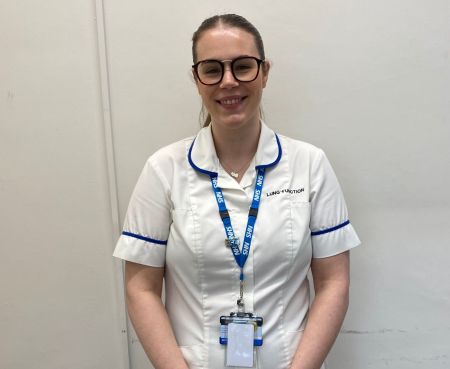
She said: “As I am currently completing a Graduate Diploma in Respiratory Science, this is helping me to understand the job I perform daily in more detail. I really enjoy continuously learning and developing in my career and this is helping me to become a qualified Respiratory and Sleep Physiologist.”
Poppy encourages anyone with a keen interest in respiratory/sleep and providing specialised patient care to consider a role in Respiratory and Sleep Physiology.
“If you enjoy working with patients, working as a team, and making a positive impact on patients during their care journey, you should consider a role in Respiratory and Sleep Physiology.”
Find out more about respiratory physiology and sleep sciences here: Respiratory physiology and sleep sciences | Health Careers.